
Creating Three Dimensions with Color Temperature

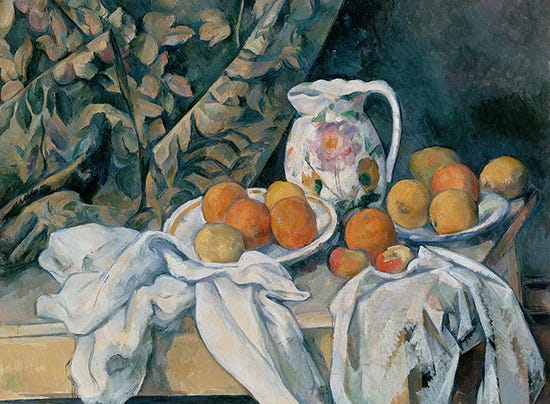
What makes an object look three-dimensional? We use a variety of cues to give us this information: light and shadow, contrast, pattern, color, texture, scale, temperature and value, usually in combinations. Our ability to measure these different parameters and make a decision about the importance of something in our field of vision is automatic and immediate—a product of millions of years of evolving visual sophistication. Our color-sensitive binocular vision has enabled us to be one of the most successful of the sighted animals on the planet, and it is what allows us to perceive and appreciate visual beauty. Most people do not have to think much about visual perception, but as artists, it is useful to investigate.
When we first began to study drawing and painting, we learned to render a 3-D object in a realistic manner employing a host of the visual cues just described, often in an unconscious way. As we began to learn more about black a…