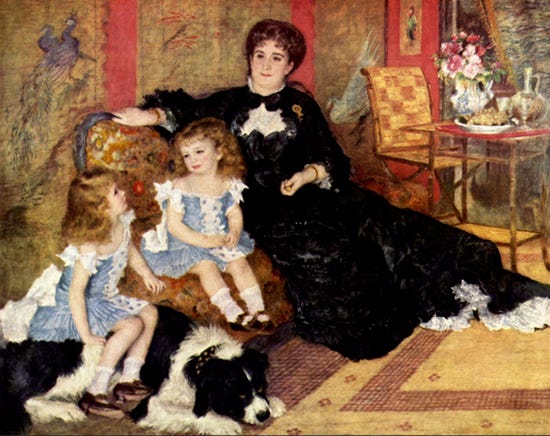
Observing the Observer
Perspectives from The Artist's Road
Continuing on our theme of painting our animals from last week’s article, Work Like a Dog -
In portrait and still life work, artists are observers of the intimate—the interior worlds of home and studio. Here, the figure, the object, the people and animals which inhabit the space become the dominant focus. Finding and expressing a connection with them is essential to the expressive power of these paintings. The rule is simple: paint what you know and love. And so it is that we, along with our artist colleagues past and present, have painted our animal companions. Not only are they patient and generally serene models, but they also possess a dignity and acceptance of life that we would do well to try to emulate.
We’ve sampled a few favorites here, from Impressionism to Futurism and have found great diversity and always a passionate sense of connection between artists and their own canine companions or those of the households they are painting. James H. Rubin focuses in his book, Impressionist Cats and Dogs: Pets in the Painting of Modern Life on the era of Impressionism, a time when dogs began to be included more often in portraits with families and not just as working animals. In some of these paintings, the dog is the only figure directly looking at the viewer, “acknowledging the outside world”, as it were, while his human companions are rendered as oblivious to the painter and viewer. Rubin writes: “The tradition revealed . . . is one that turns the most ordinary visual scene into an extraordinary experience of art. By acknowledging the presence of an observer, the pets call attention to the maker of the image, and engage in a sort of dialogue with the viewer. Thus, Renoir and Cassatt used these pets not only to accompany and comment on the people in their pictures, but to call attention to their own presence as sensitive observers and creative portrayers of intimate scenes.” Often, the dog observes the observer.
(Read more about the wonderful artist known for his animal portraits by clicking here - Edwin Henry Landseer.)


I loved the thought that "the dog observes the observer." I often feel that's true in life as well as art. We spend so much time believing we're watching them, while all along they're quietly studying us. X