
Pictures of the Floating World
East Meets West - Ukiyo-e and Impressionism

Women in the Garden 1891 Pierre Bonnard
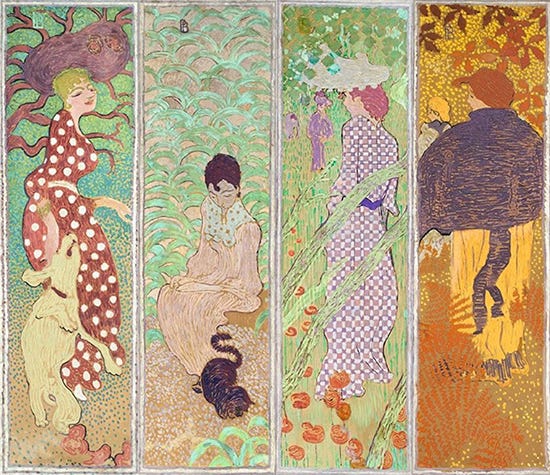
It was the Convention of Kanagawa in 1854 that opened relations and trade between Japan and the West, ending 200 years of Japanese seclusion. It was impossible to know at that time the immense effect that this would have on the world of western art.
Beginning in the late 17th century, Japanese artists had produced woodblock prints known as Ukiyo-e—pictures of the floating world. By the time of the opening of relations between east and west, the woodblock prints had become common in Japan, some being used as packaging material for valuable porcelain pieces being exported to European markets.
The prints, some in black and white and others with up to thirty colors, celebrated everyday Japanese life, “living only for the moment, turning our full attention to the pleasures of cherry blossoms; singing songs, drinking wine, diverting ourselves in just floating, floating; . . ., like a gourd floating along with the river c…