
Seeing Red
A Brief History

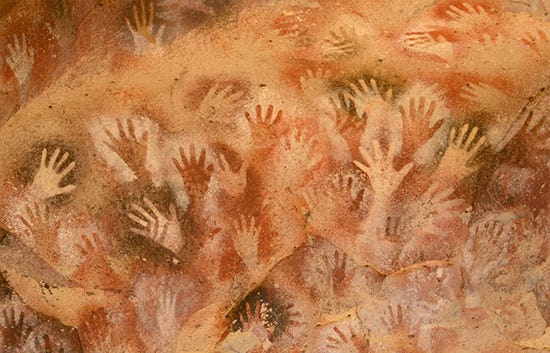
Red Ochre and Charcoal Hand Prints in a Neolithic Cave
Red has likely been the most important color to humans since the dawn of man—and it still is. Consider the stop sign, painted red all over the world to symbolize caution and danger. The history of man’s interest in and even lust for this pigment is long, fascinating and sometimes violent. We present here a brief history of Red, its sources and uses in many of its various concoctions both natural and man-made and the impacts these pigments have had on the world and art, in particular.
Red Ochre
One of the oldest pigments known is red ochre, used in ancient cave paintings. Red ochre is the most common pigment in the world and comes from hematite, or iron ore. It is composed of clay tinted with hematite. Since hematite clays were so common, they were easily found and exploited by Neolithic peoples, who made extensive use of them along with charcoal in their cave drawings and paintings. We can only speculate why they…