
The Hand of the Artist
Perspectives from The Artist's Road

Spring 1917 Konstantin Korovin
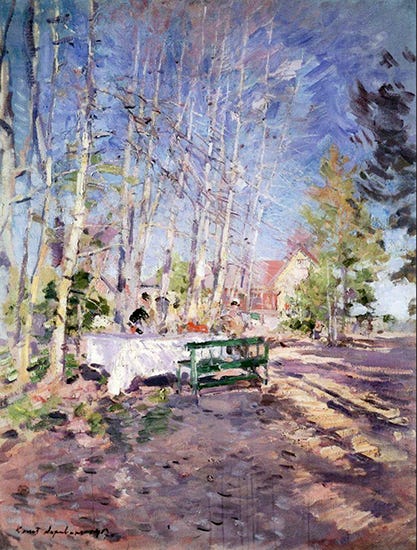
When developing or finishing paintings, we often discuss the issue of style regarding edges, and, in particular, the outer edges of a painting. In a representational work, there can be a magic quality to leaving the first, often wilder strokes, in the finished piece. Leaving some of these strokes reveals not only the hand of the artist, but also the skill it takes to bring those initial quick strokes to a polished finish. Richard Schmid was a master of this type of painting bravura and it is a joy to see in his paintings. Hard to imagine now, but there was a time when the “hand of the artist’ was considered inappropriate in painting.
Until the mid 1800s, including the Renaissance and Neo-Classical periods, flawless realism (often called idealized realism) was the highest goal in a painting. Using fine sable brushes while glazing oil color on smooth surfaces helped to create the most realistic image possible. By the e…