
The Island of the Color Blind
Perspectives from The Artist's Road

After the Rain, Plyos 1889 Isaac Levitan
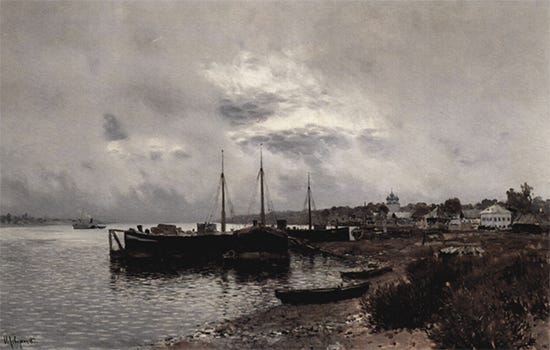
Most of us take our color vision somewhat for granted—we have never known any differently. Still, it can take years of practice to discern the slight differences in temperature and value between two adjacent colors well enough to paint them. Color is so dominant in our daytime visual experiences that differences in value, or luminance, can be especially troublesome to recognize and match. This has to do with the two different light sensing cells in our eyes, the cones and rods, which play different roles in our vision and have different sensitivities to the light and luminance spectrum. Basically, the cones sense colors in daylight, while the luminance-sensing rods excel in dimly lit situations and provide our night vision. See Perspectives from The Artist’s Road - The Purkinje Effect. Imagine then, what the world must be like for someone who can see no color at all, and is also extremely sensitive to bright sunl…