
The Story of Blue

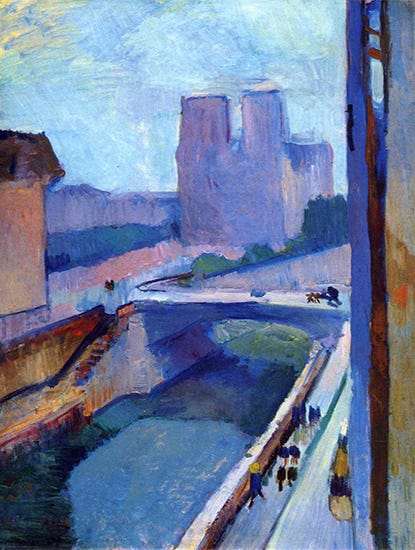
“A certain blue enters your soul.”
- Henri Matisse
Our ability to see blue is critical, not only for the pure aesthetic beauty of the color, but also for the ability to sense the blue light of dawn (heavily concentrated in the blue spectrum) which sets our inner clocks, our circadian rhythm.
Blue is often cited as the favorite color of respondents to color surveys. Historically, the high cost of Ultramarine Blue pigment created a concept of blue as being the most precious of colors. As with all colors, blue has many associations—the color of depression and sadness, as well as the color of royalty, trustworthiness, wisdom and serenity.
Blue encompasses the massiveness of the sky and its reflection in waters. Although it can be a significant part of what we see, there were cultures who never developed a word for it in their languages. Artists, of course, have always valued the blue in their palettes. “Blue is the only color which maintains its own character in all its tones.” - Raoul Dufy
We decided to examine the history of blue in artists’ pigments, starting with one of the oldest, dating from 3,000 BC—Egyptian Blue