
Total Eclipse
Perspectives from The Artist's Road


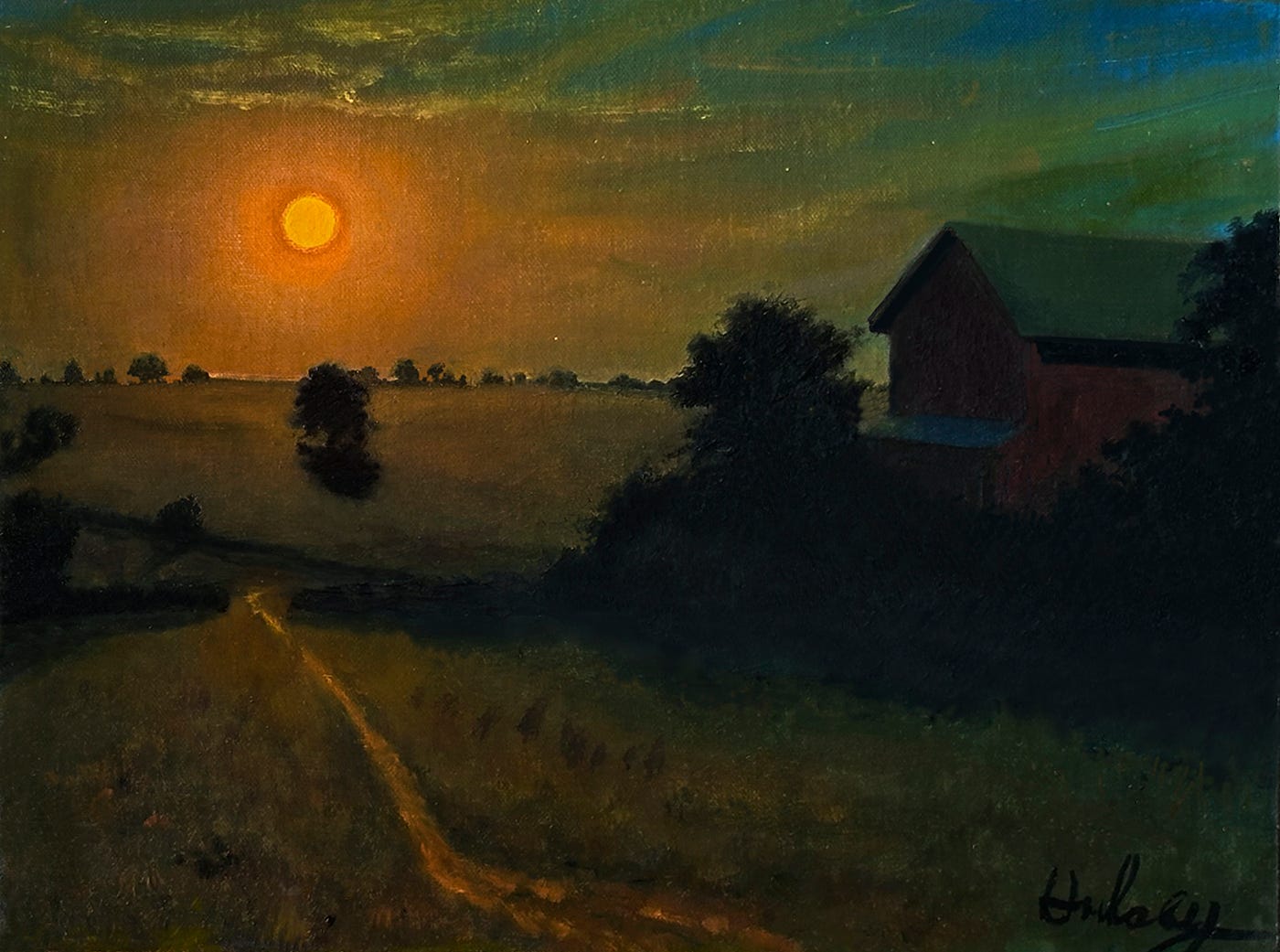
Tomorrow, March 3rd, at 4 a.m., ET, painters of moonlight will get a real treat. A total lunar eclipse will occur—“a blood moon”—visible across much of North America. Totality will last from 6:04 a.m. ET until around 7 a.m. ET. It will be the last one of its kind this year, and it will cause the moon to turn bright red orange! A total lunar eclipse happens when the earth aligns perfectly between the sun and moon, casting a shadow which blocks direct sunlight from striking the moon. Instead, the moon is lit by refracted light which has curved around the earth and been filtered by the earth’s atmosphere. This scatters the blue light, transmitting only the red spectrum. The presence of dust and other pollutants in earth’s atmosphere intensifies this effect. This eclipse will be worth getting up for.
We were out last September with some students painting that red-orange full moon, also caused by a lunar eclipse. Because the eclipse occurred …
